
Rapid AMH Test in [AREA_NAME]
The Rapid AMH (Anti-Müllerian Hormone) Test provides a crucial quantitative measure of your ovarian reserve, indicating the number of egg-producing follicles remaining. Get insights into your fertility status quickly and conveniently with our in-pharmacy rapid test.
[wpf_test_price_line location="10" service="4"]

Harley Diagnostics
Benefits of Monitoring Your AMH Levels
AMH is produced directly by small follicles in the ovaries. Monitoring this hormone is an effective way to assess a person’s remaining egg supply and potential fertility window.
Assess Ovarian Reserve
Provides a clear numerical estimate of your current egg supply.
Fertility Planning
Helps women plan the optimal timing for trying to conceive or deciding on fertility preservation methods (e.g., egg freezing).
Guide IVF Treatment
Essential for fertility specialists to predict the likely response of the ovaries to stimulation medication during IVF.
Investigate PCOS
Very high AMH levels are often used as a marker for Polycystic Ovary Syndrome (PCOS).
Harley Diagnostics
Who may consider AMH Testing?
A test is typically sought for proactive family planning or when fertility issues are suspected. A test is recommended if you experience any of the following:
1
Difficulty Conceiving
Testing after 6–12 months of unsuccessful attempts to get pregnant.
2
Advanced Reproductive Age
Proactive testing for women over the age of 30, as ovarian reserve naturally declines with age.
3
Family History
A history of Premature Ovarian Failure or early menopause in close female relatives.
4
Pre-Fertility Treatment
Recommended before starting any assisted reproductive treatments (IVF, IUI).
5
PCOS Symptoms
Irregular periods, excess androgen symptoms, or a clinical suspicion of Polycystic Ovary Syndrome.
How it works
How Does the Rapid AMH Test Work in [AREA_NAME]?
Our rapid test is a simple and convenient way to measure your AMH levels using advanced Point-of-Care technology. Unlike other reproductive hormones, AMH levels are stable throughout the menstrual cycle, meaning the test can be performed at any time.
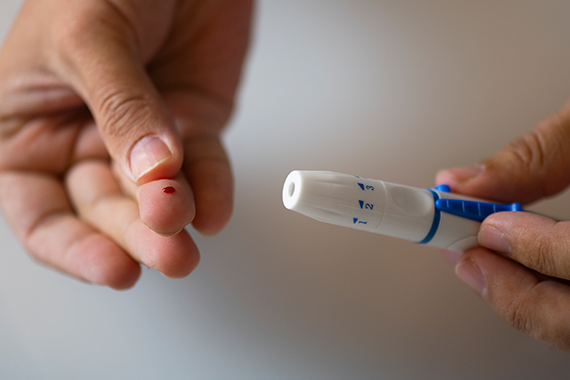
A small blood sample is collected and applied to a special test card.
The test card is inserted into an analysis machine.
Results are provided within 15 minutes, right at the pharmacy.
The clinic may provide advice or signpost you to your GP, if required

Overview
What does the test look for?
The test measures the concentration of the Anti-Müllerian Hormone (AMH) in your serum, measured in picomoles per litre (pmol/L) or nanograms per millilitre (ng/mL). AMH is secreted by the granulosa cells of the small, growing ovarian follicles. Since the number of these follicles directly correlates with the number of eggs remaining, the AMH level is one of the best available markers for ovarian reserve.
Harley Diagnostics
Step-by-Step Guide to Your Visit at [LOCATION_NAME]
Your appointment is designed to be quick and straightforward. You will meet with a trained professional who will guide you through the process.
1
Consultation
Your details will be confirmed by a member of the team performing the test.
2
Blood Collection
The professional will perform a simple and minimally invasive finger-prick to collect a small blood sample.
3
Rapid Analysis
The blood sample is analysed on-site using a special test card and a test analysing machine.
4
Results
You will receive your results in just 10–15 minutes, allowing for rapid insight into your ovarian reserve.
5
Advice
The clinic may provide advice, or they may signpost you to your GP if required.
Harley Diagnostic
What do your AMH test results mean?
The rapid AMH test provides a quantitative result showing your hormone level (pmol/L), which is interpreted as a measure of your current ovarian reserve.
[wpf_test_result_sample service="4"]
Harley Diagnostic
Other Available Rapid Blood Tests
[wpf_test_list location="10" area="brighton"]
HELP & SUPPORT
Check Out Our Frequently Asked Questions!
Our team is dedicated to providing the best possible service to our customers. Check our FAQs section for common queries or contact our team.
What is AMH?
AMH stands for Anti-Müllerian Hormone. It is a hormone produced by the granulosa cells in the ovaries (in women) and is primarily used as a key indicator of ovarian reserve, or the quantity of remaining eggs.
Does a high AMH level mean I am more fertile?
A high AMH level suggests a large supply of remaining follicles, which is generally a positive indicator for fertility. However, excessively high AMH (over 20 pmol/L can indicate PCOS, which often causes irregular or absent ovulation, paradoxically making conception more difficult.
Does the test predict whether I can get pregnant?
No. AMH is a measure of the quantity of eggs (reserve), not the overall health of your reproductive system. A diagnosis of fertility requires a full assessment, including an assessment of the fallopian tubes and semen analysis.
Who should consider getting a rapid AMH test?
Anyone aged 20 or over who is planning their family, considering egg freezing, or is investigating difficulty in conceiving should consider this test.
Does the test require any special preparation, like fasting?
No, the test is a simple finger-prick blood test that does not require you to fast. It can be performed at any point in the menstrual cycle.
What should I do if my AMH is low?
A low AMH is a strong indicator of diminished ovarian reserve. You should consult with your GP or a fertility specialist (Gynaecologist or Reproductive Endocrinologist) to discuss personalised options and further assessment.